
Why would I use rounded corners?
There are so many reasons you might want to use rounded corners on your quilts!
-
It’s a great design element – either to compliment or contrast with the quilt design itself.
-
To prevent pooling on bed quilts. If you find that the corners of your bed quilts touch the floor, rounding the corner could solve that for you!
-
You hate the mitered corners on squared off quilts. Rounded corners don’t require mitering!
-
You just like it!
Whatever the reason you choose rounded corners for your quilt, this blog has all the info you need to get up the nerve to cut the corner and choose the right binding method for your quilt.
Templates

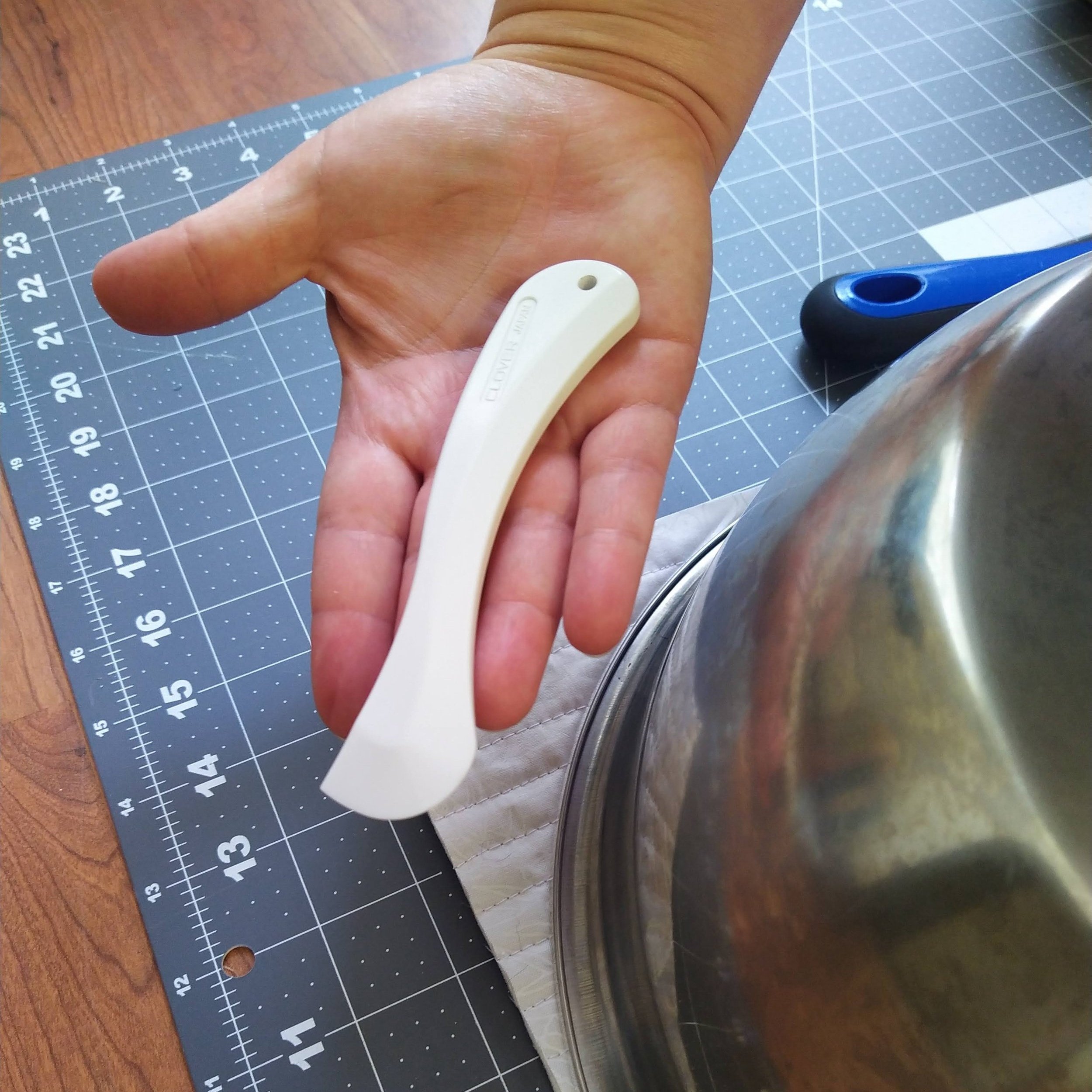
While there are commercial acrylic templates on the market, this is one area of quilting that I personally feel that a household object works perfectly. Plus, you have a nearly infinite array of sizes to choose from when you use a household object as your template – depending on what you have around your house. I encourage you to at least try making a quilt with rounded corners before purchasing a template.
I tend to use my mixing bowls as templates. I bring out the set and hold each one up against the corner of my quilt or place them near the quilt pattern to see what size I like best for that quilt. I almost always use the largest mixing bowl I own. You could also use any large circular object as your template such as a dinner plate, pots and pans, flower pot, or anything else that suits your fancy! You could even freehand each curve!
Marking
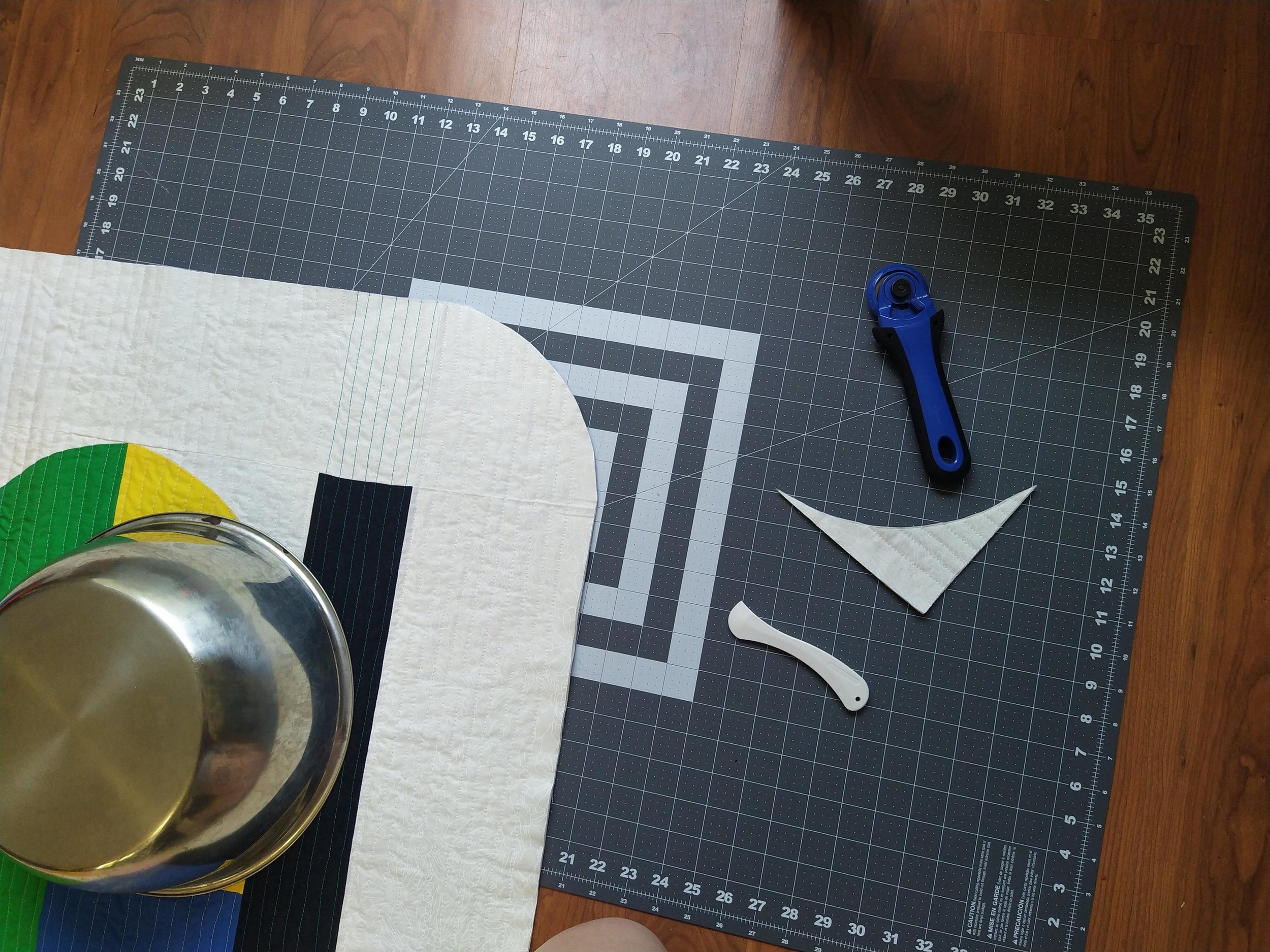
I think that rounding the corners is best done after the quilt has been quilted and squared up. Line up your template in one corner of the quilt so that the template is touching each side of the quilt. By making sure that the template is touching each side, you will ensure that you have a smooth curve. Using your preferred marking tool, trace around the edge of the template. I like to use a hera marker, but since this will both be cut off and then binding will be applied, you can use a pen or marker with no worry of it showing when you’re done!
Cutting
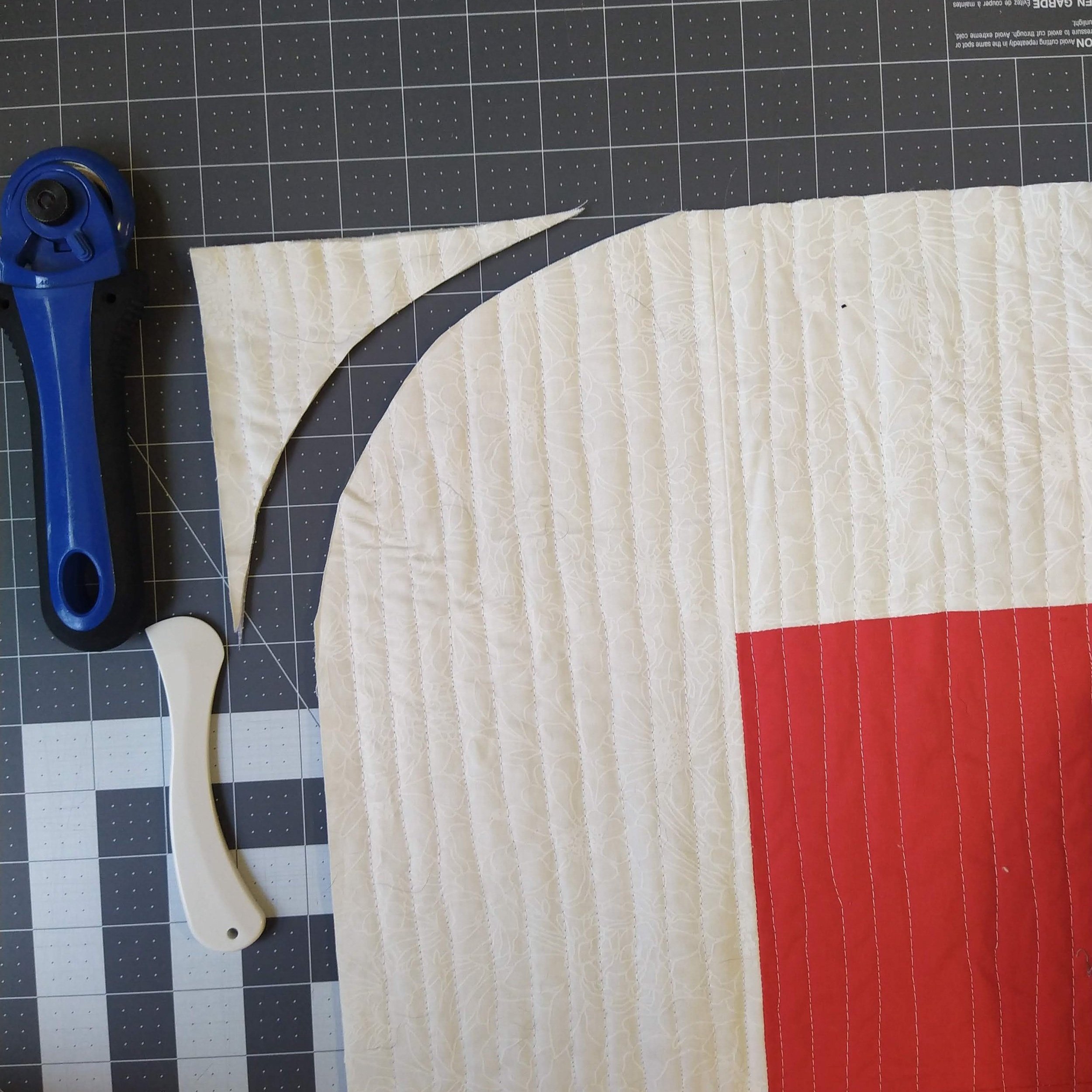
Cut along the marked line to reveal a curved corner. You could use a rotary cutter or scissors, whichever you prefer. I prefer to use a rotary cutter to simply cut along the marked line. Please note that you should not use a household object as a guide for your rotary cutter. Your mixing bowl or dinner plate was not made to be a cutting guide in the way that acrylic quilting rulers are made.


Binding

Photo by Kitty WIlkin (@nightquilter) for Quilter’s Planner 2023
I’ll start this section by saying that bias binding is preferable for binding any sort of curved edge on your quilt. Fabric has more stretch along the bias than along the grain. It is simply easier to manipulate bias binding around the curves because of the way it stretches. Straight grain binding lacks that stretch, and can bunch up when sewn to the second side. Additionally, because straight grain binding lacks stretch, it can “pull” the quilt and create a cupping effect. I have bound several quilts with curved corners and straight grain binding, and the cupping effect was either not present or barely noticeable.
However, if you need to use straight grain binding for whatever reason, it’s definitely still possible to get a nice clean finish. Here are some of my tips!
-
work slowly around the curves, particularly when sewing by machine.
-
Use pins or clips to distribute the fabric evenly around the curve. This is helpful regardless of the sewing method – hand or machine, first side or second side.
-
I have had much better results sewing the second side by hand rather than by machine. Sewing by hand forces you to go slower and allows you to work in any excess without bunching.
I have used both straight grain and bias binding when making quilts with round corners. While it is a bit more time consuming to make bias binding, it truly is much easier to work with and I think the results are worth it. You can purchase pre-made bias binding, or make your own. If you’re interested in making your own, I will have a roundup of tutorials coming soon!
 RRQuilts