Sewing With Kids: A Kindergarten Art Show

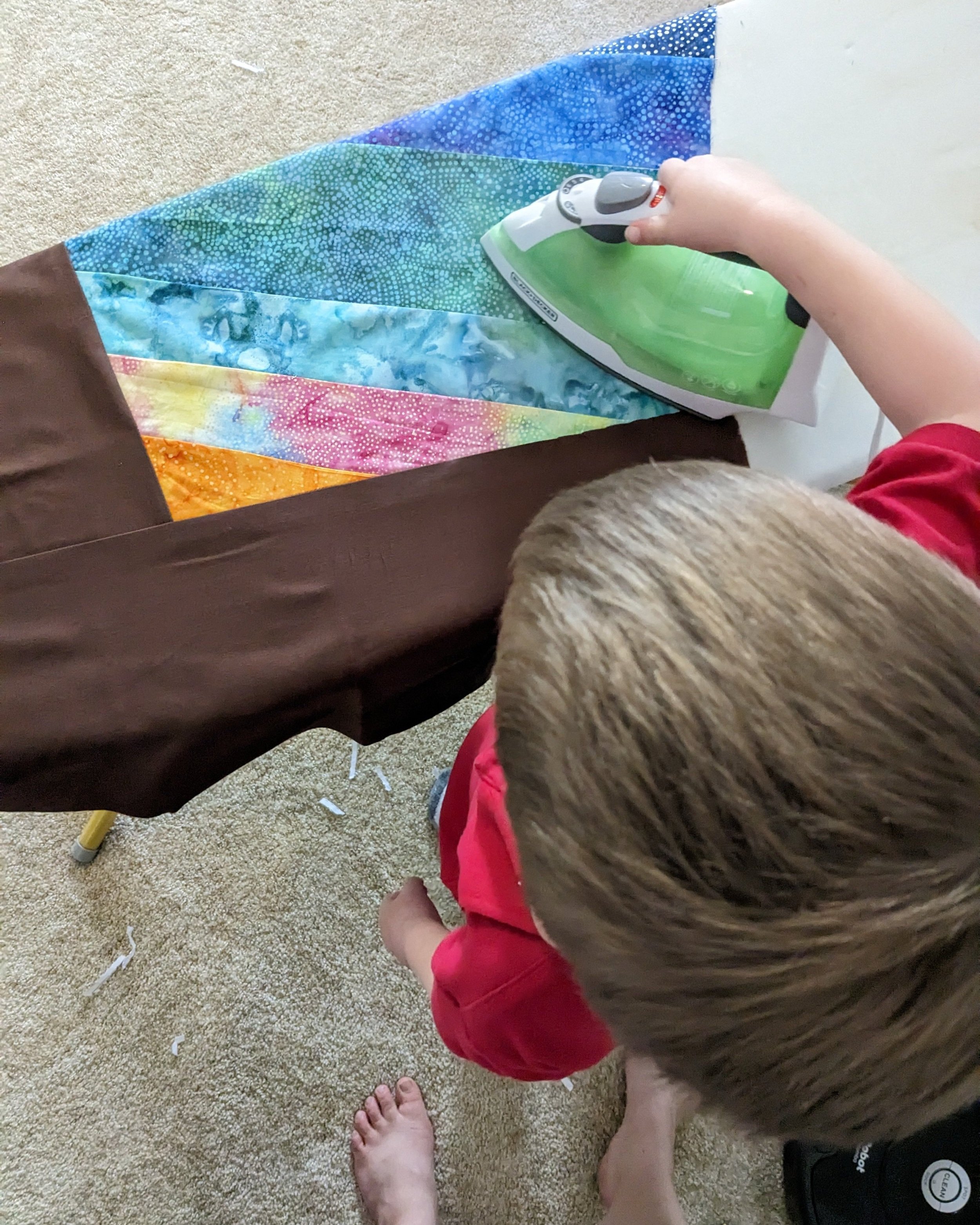
a young boy pressing his quilt

My son is in kindergarten and his school announced their annual art show earlier this spring. There were over a dozen categories that students could enter ranging from painting and drawing to lettering, woodworking, and fiber arts. I read off the list to him, and my son said immediately that he wanted to make a quilt for the art show!

Now, let me tell you that this Mama’s heart was full that my kiddo wanted to share this hobby with me. 😍 But teaching a 5 year old to do something with so many steps is a challenge. I wanted the project to be as much his as possible, but to also teach him some correct ways to do various steps of the process so that the project would be finished and structurally sound for years to come.

He had shown interest in sewing with me twice before , so he was already familiar with my sewing machine, some of the tools, and the rules of the sewing room. The previous projects were simple pillowcases for instant gratification and had very few steps. Completing a quilt would require a much different approach since there would be many more steps and many more choices to make a long the way.

Ive included some of our experience in this blog, and some of my tips and lessons learned for sewing with kids. I’d love to hear your top tips for sewing with kids in the comments!

First of all, know the kids you’re working with before you start. Understand their physical ability to use tools as well as their tendency to follow instructions, learn new things, and be patient. Every kid and every adult teacher will be different!


All the choices…

I wanted this project to be something that my son took as much ownership of as possible. I knew I would need to help with at least some of the actual sewing skills, so I let him make as many choices as possible. He selected the theme, pattern, fabrics, fabric placement, quilting method, binding method, basting method – everything. I of course, gave him selections for each item that I felt comfortable with, and let him choose from there. For example, when it was time to select the quilting method, I gave him the choice of machine quilting on my domestic machine, hand quilting, or ties. I showed him examples of each and he chose ties!

Kiddo taking charge of the cart in the fabric store

Here’s a run-down of all the decisions he made:

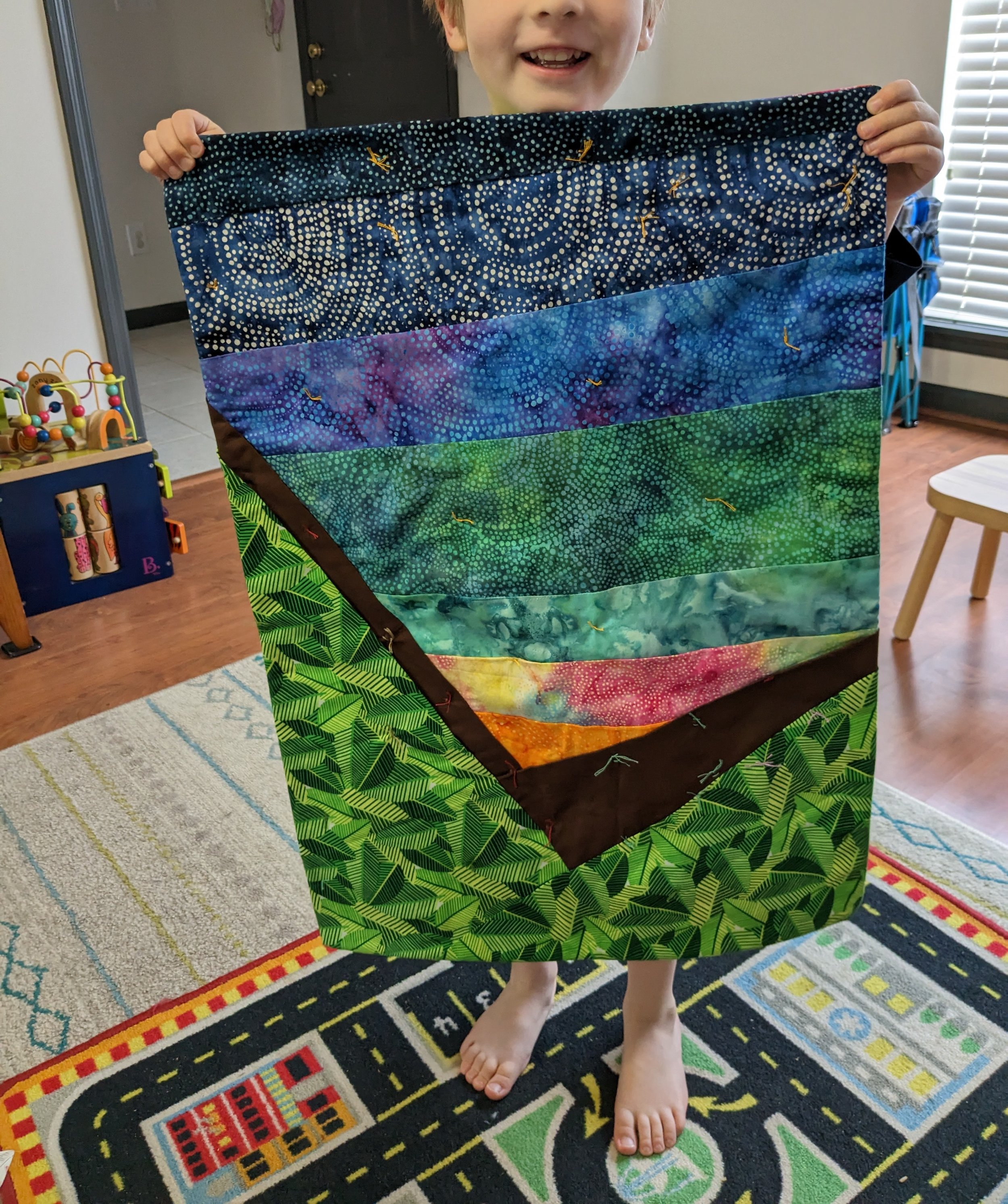
  • Theme: Sunset on the Mountains

  • Pattern: Night Sky by Skyclad Quilts

  • Size: Wall hanging (I did some math to modify the pattern)

  • Fabrics: Mostly batiks along with some solids. The batiks already had the stars in them 🙂

  • Basting method: Safety Pins

  • Quilting Method: ties (he chose colors to make it look like there were flowers in the mountains – how sweet!)

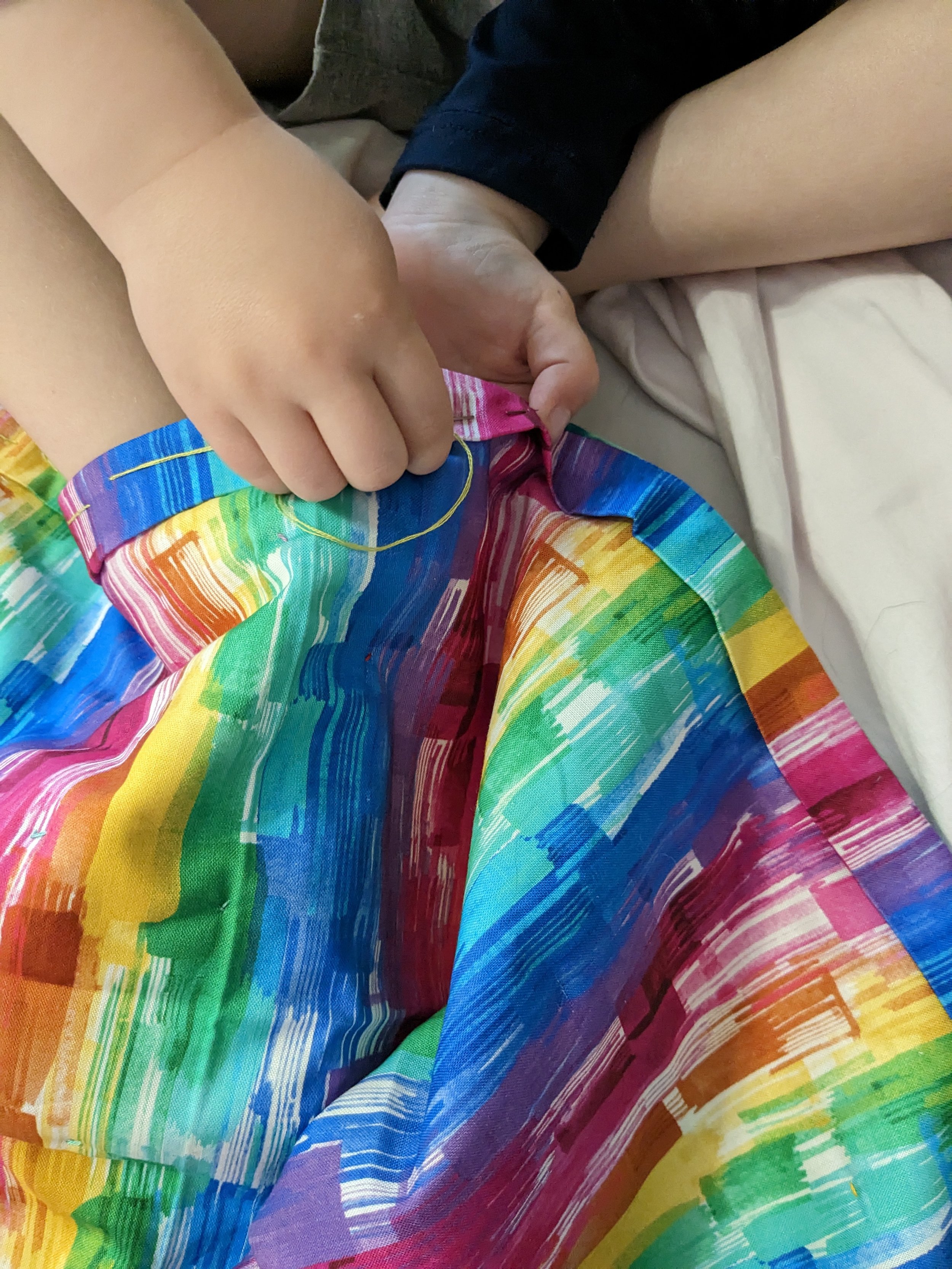
  • Finishing Method: facing with big stiches on the back

All the tools…

As I mentioned, this wasn’t my son’s first time using my sewing machine, but I do think it was his first time using an iron, the rotary cutter, and some of my better sewing scissors. For each new tool, I showed him how to use it properly, explained what might happen if he didn’t, then I would guide his use, make any needed adjustments, and finally I would allow him to use it on his own supervised (he’s still young enough that I don’t think we will do any unsupervised sewing, cutting, or ironing in the near future). For example, teaching him to use an iron looked something like:

  • show him how to iron

  • explain that if he doesn’t do it correctly, he could burn his fabric or even start a fire

  • put my hand over his and guide his hand placement and let him get the feel for how fast to move the iron

  • ensure that the ironing board is set up low enough for him to use it

  • watch him succeed!

  • I soon realized that the iron I use is too heavy for him, so I asked around and ended up getting a smaller iron. It was much easier for him to use!

All the adjustments…

Kids are all at different skill levels, and so doing most activities with them requires constant adjustments and modifications. I think sewing is no exception. You can prepare ahead of time with the things that you think will set your kiddo up for success, but until you start, you just don’t know if it will work. Some of the modifications that worked well for us were:

  • A box under the sewing pedal to make it easier to reach (we actually used a stepstool)

  • A smaller iron

  • Smaller scissors

  • Lots of pins!

  • Keeping the project small

  • Working in small chunks


Here’s the large iron, which was OK for a while, but we quickly realized was too large and unwieldy for him.

The smaller iron (smaller and lighter) was a much better fit for his hand and abilities!

Over the course of this project, he gained so much confidence in sewing!!
It look a lot of patience and perseverance on my part to make sure that we kept up working on the project to finish just in time for the school art show. I offered to work with him on the project anytime that we had a a free 30 min or so to work. If he didn’t want to work on it, I didn’t push him but simply reminded him that if I finished it for him, he couldn’t enter it in the art show. Eventually, we strung together enough of those 30-minute sessions to finish the project. I made sure that he was involved in every single step of the process , from cutting to sewing, pinning to pressing. He did basically all of the piecing, and ironing, and was involved in the cutting, pinning, quilting, and hand sewing the facing to the back of the quilt. While I did help him finish some of the steps, the only thing I did for him was to trim the quilt and sew the facing to the top since those tasks have less margin for error. All in all, I’m so proud of my son (and his blue ribbon – don’t tell anyone that there were only 2 entries in the category) and myself for completing this project.

Kiddo hand sewing the facing to the back of the wall hanging.The final product! That smile says it all!Blue ribbon!!
Leave a comment